Our Location
470A Beike Bldg, Gaoxin Rd. Nanshan Hi-Tech Park Zone Shenzhen China

470A Beike Bldg, Gaoxin Rd. Nanshan Hi-Tech Park Zone Shenzhen China
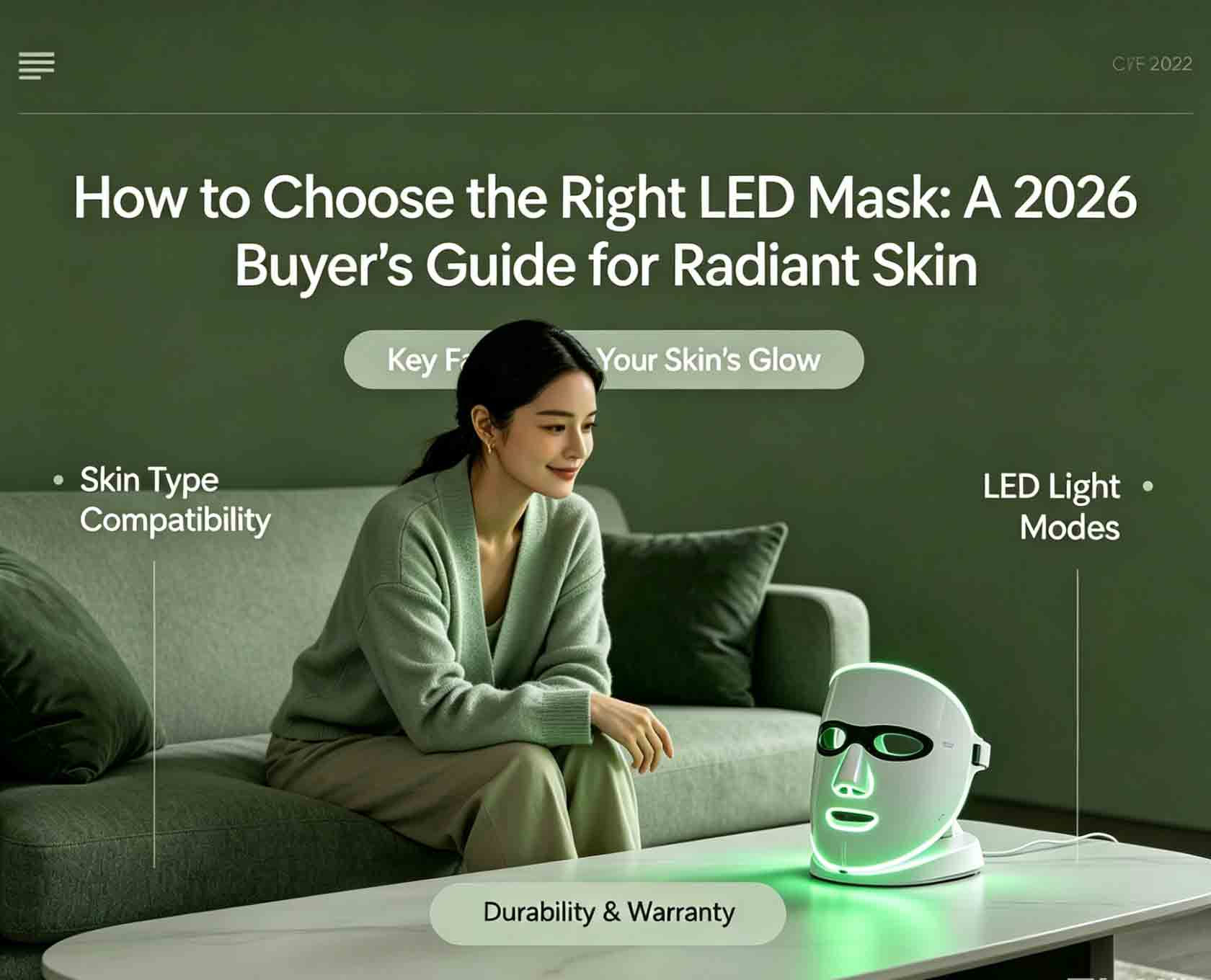
Meta Description: Confused by all the LED mask options? Discover the key factors—wavelengths, irradiance, safety—to choose the perfect LED mask for your skin goals.
Core Keywords: LED face mask, red light therapy, how to choose LED mask, LED mask wavelengths, at-home skincare devices
Introduction
LED (light-emitting diode) therapy has quickly moved from dermatologists‘ offices into our daily skincare routines. Scroll through social media and you’ll see glowing masks promising clearer, firmer-looking skin. But not every mask delivers the same results. Some users swear by their devices, while others notice no change at all.
So how do you choose the right LED mask for your skin? The answer comes down to three technical details: wavelengths, irradiance, and consistency.
Step 1: Understand Your Skin Concern First
The fastest way to get overwhelmed is to start comparing brands before you know what you actually want to treat. Start with your goal:
| Goal | Recommended Wavelength |
|---|---|
| Fine lines & wrinkles | Red light (630–660 nm) |
| Loss of firmness / sagging | Red + Near-infrared (800–850 nm) |
| Acne | Blue light (~415 nm) |
| Redness / post-acne marks | Yellow light (~590 nm) + Red |
| Tired / dull skin | Red + Yellow |
If you want an all-round mask that covers multiple concerns, look for one that includes red and blue as a minimum—then consider adding yellow, infrared, and deep near-infrared for broader support.
Step 2: Understand Wavelengths (What the Numbers Mean)
Different wavelengths penetrate the skin at different depths and interact with specific biological targets. Red light (630–660 nm) penetrates into the dermis, where it is absorbed by mitochondria in skin cells. This absorption increases cellular activity—leading to increased collagen and elastin production. Red light primarily supports collagen production and improves the appearance of fine lines and skin radiance. Near-infrared light (800–850 nm) penetrates even more deeply than red light. The warmth it produces may induce vasodilation and is also thought to reduce inflammation. It supports skin firmness and overall tissue health. Blue light (~415 nm) targets acne-causing bacteria. When blue light is absorbed by bacterial porphyrins, it leads to cell death of acne-causing bacteria, resulting in acne improvement. Green light (520–560 nm) helps fade facial pigmentation by reducing melanin production while also decreasing facial redness indicative of inflammation
Step 3: Look Beyond Wavelengths — Irradiance Matters
This is the most important step many buyers miss.
Precision LED therapy is the controlled delivery of specific light wavelengths at a validated intensity and dose, evenly distributed across the skin for a defined period of time. You can think of it like watering a garden: it‘s not just about having a hose; it‘s about how much water actually reaches the soil, for how long, and how consistently.
If a device does not deliver a therapeutic dose of light, “people aren‘t just looking at slower results—they may never see meaningful results at all
What to look for:
An LED mask that sits in your drawer will never deliver results. Comfort matters.
What to check:
If the mask feels heavy on your face or gets too warm, you‘re less likely to use it consistently—and consistency is the real secret to LED therapy results.
Reputable brands are transparent about their specifications.
What every honest LED mask should disclose:
If a brand hides these details behind marketing language, that‘s a red flag.
LED Mask Quick Reference Table
| Goal | Primary Wavelength | Session Frequency | Expected Timeline |
|---|---|---|---|
| Anti-aging | 630–660 nm red + 800–850 nm IR | 3–5x weekly | Visible in 4–8 weeks |
| Acne | ~415 nm blue | 3x weekly | Improvement in 2–4 weeks |
| Glow / Brightening | 630 nm red + 590 nm yellow | 5x weekly | Brightness in 2–3 weeks |
LED masks are not magic, and they are not a replacement for professional treatments. At-home devices will not be as strong as the LED used in a clinic setting, but they do offer similar benefits when used correctly and consistently-. The right LED mask for you is the one that matches your skin concern, delivers clinically meaningful irradiance, and fits comfortably into your lifestyle.
Ready to start your LED journey? Choose your mask based on your primary goal first, then check the specs—and remember, consistency beats intensity every time.
Q: Can I use an LED mask every day?
A: Most masks are designed for 3–5 sessions per week. Always follow the manufacturer‘s recommendations.
Q: Does LED mask really work for wrinkles?
A: Yes. Dermatologists have long used LED therapy to support skin healing and address the signs of aging. The best LED masks for wrinkles utilize clinically validated wavelengths (633 nm red and 830 nm near-infrared)-13-.
Q: Is LED therapy safe for all skin types?
A: LED therapy is generally safe for all skin types, though research continues on optimal protocols for Fitzpatrick skin types V and VI-11. When in doubt, consult a dermatologist before starting any light therapy regimen.

